Molim — Personal credit report & score mobile app

Redesigned mobile app (17M+ users), enhancing the overall experience and increasing ratings to 4.2★ on Google Play store.

Industry:

Fintech (Credit Management)

Role:

Lead UX Designer

Contribution:

Product design, research & synthesis, IA, prototyping and design system

Context

Context

Molim (by SIMAH—Saudi Credit Bureau, the national credit reporting agency) is a credit management app used by 17M+ users across Saudi Arabia.


Users struggled with poor onboarding, unclear subscription options, and technical issues that caused low ratings and high drop-offs. The core problem: users did not trust or understand the product.

Key signals:

Key signals:

  • 2.8★ rating on Google Play

  • 27% of subscribers cancelled within the first billing cycle

  • High support load due to onboarding and pricing confusion

My role

My role

I led the end-to-end UX effort. In a six-person team including a design manager, researcher, UI designer, and illustrator.

I led the end-to-end UX effort. In a six-person team including a design manager, researcher, UI designer, and illustrator.

My responsibilities included:

  • UX audit and research synthesis

  • Information architecture redesign

  • Core user flow redesign

  • Design system creation

Key insight

Key insight

User reviews, support data, and heuristic evaluation showed a consistent pattern:

Most users abandoned the app because they did not understand their credit score or what they were paying for.

The problem was not a single screen. It was a breakdown of trust at three key moments.

Priortization

Priortization

Instead of redesigning the entire app, I focused on the three moments that most affected ratings and subscriptions:

  • Trust during onboarding

  • Credit understanding on the dashboard

  • Subscription decision clarity

This approach concentrated design effort where it would drive the biggest business impact.

Challenge

Challenge

How might we enable Saudi users—both nationals and expats—to easily onboard, understand subscription options, and navigate the app seamlessly?

What we shipped

What we shipped

I designed six solutions that addressed core friction points: onboarding drop-offs, confusing navigation, unclear subscriptions, poor visual hierarchy, inconsistent design, and accessibility gaps.

Solution 1

Solution 1

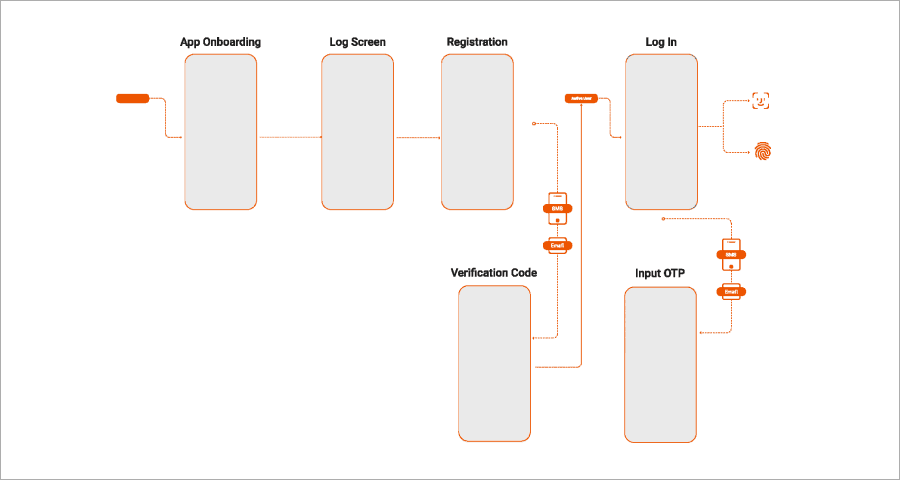
Improved onboarding

Improved onboarding

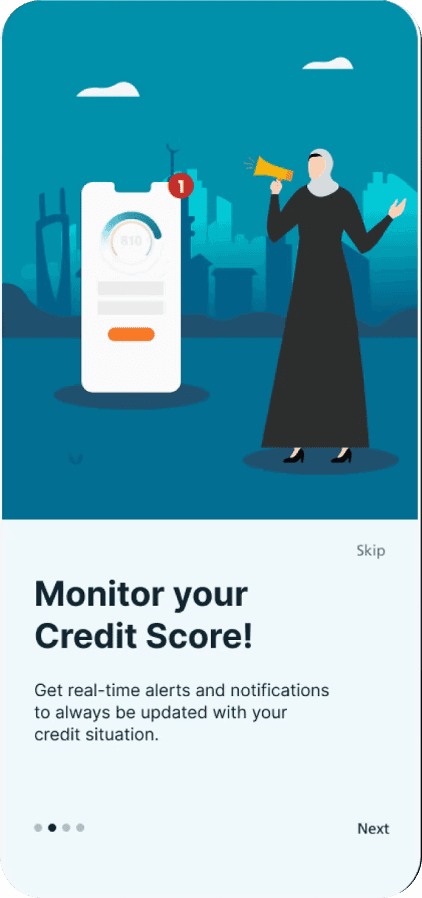
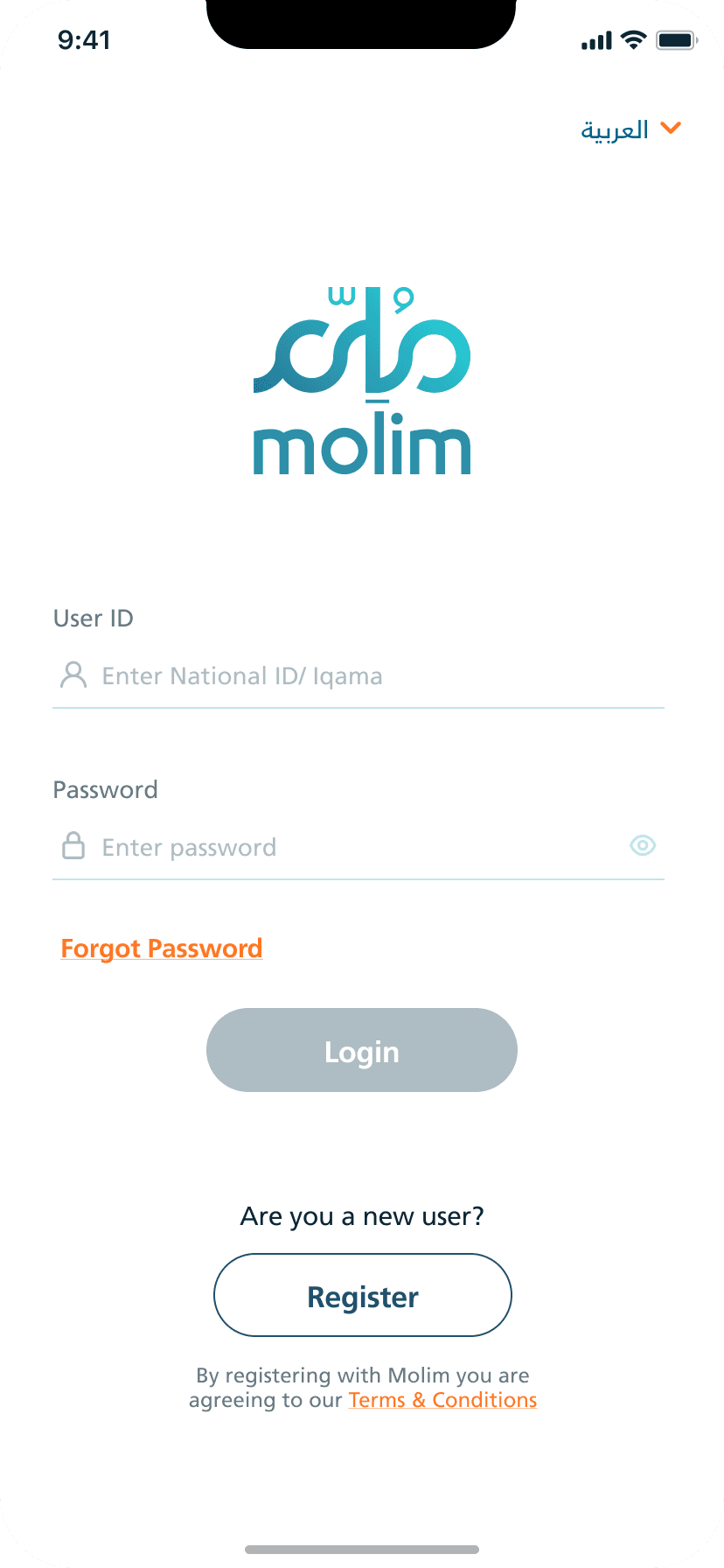
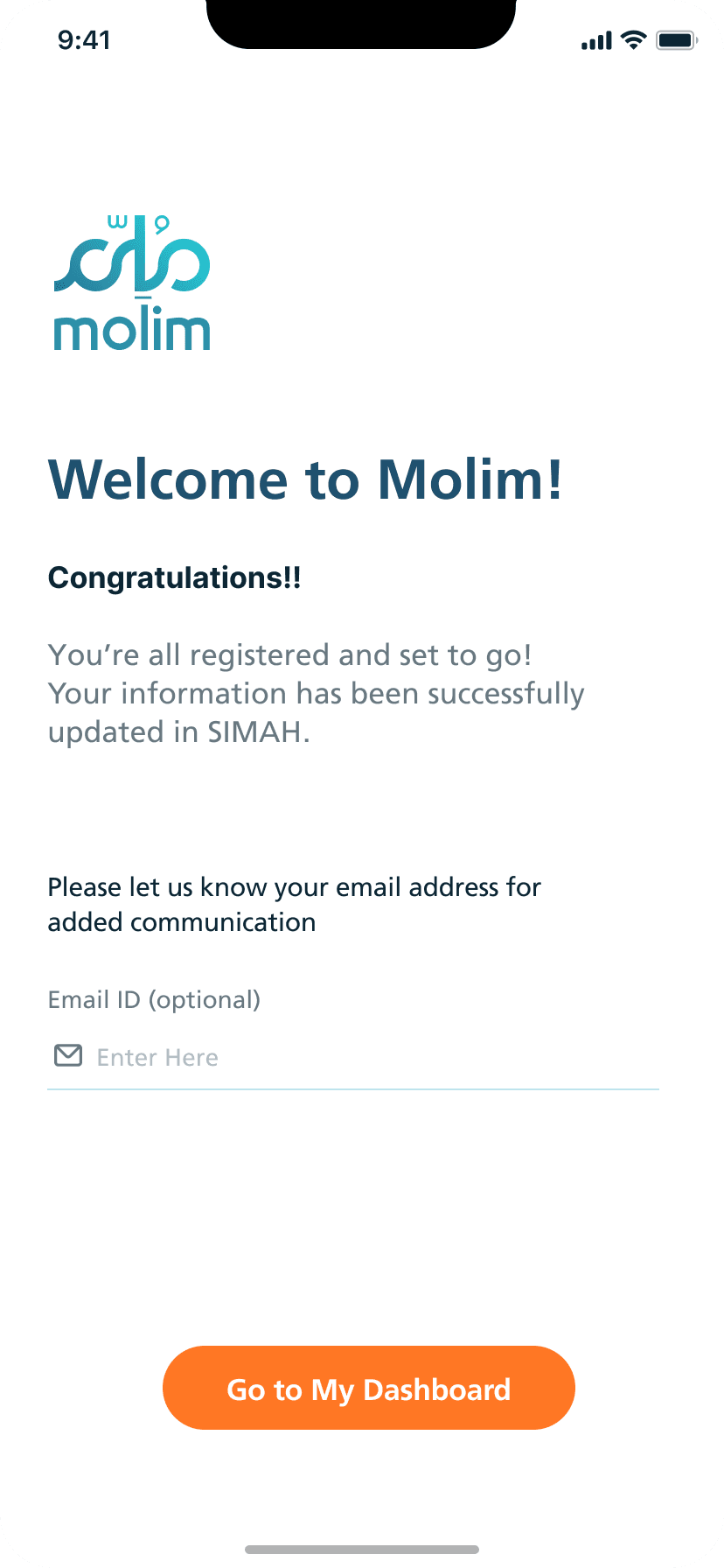
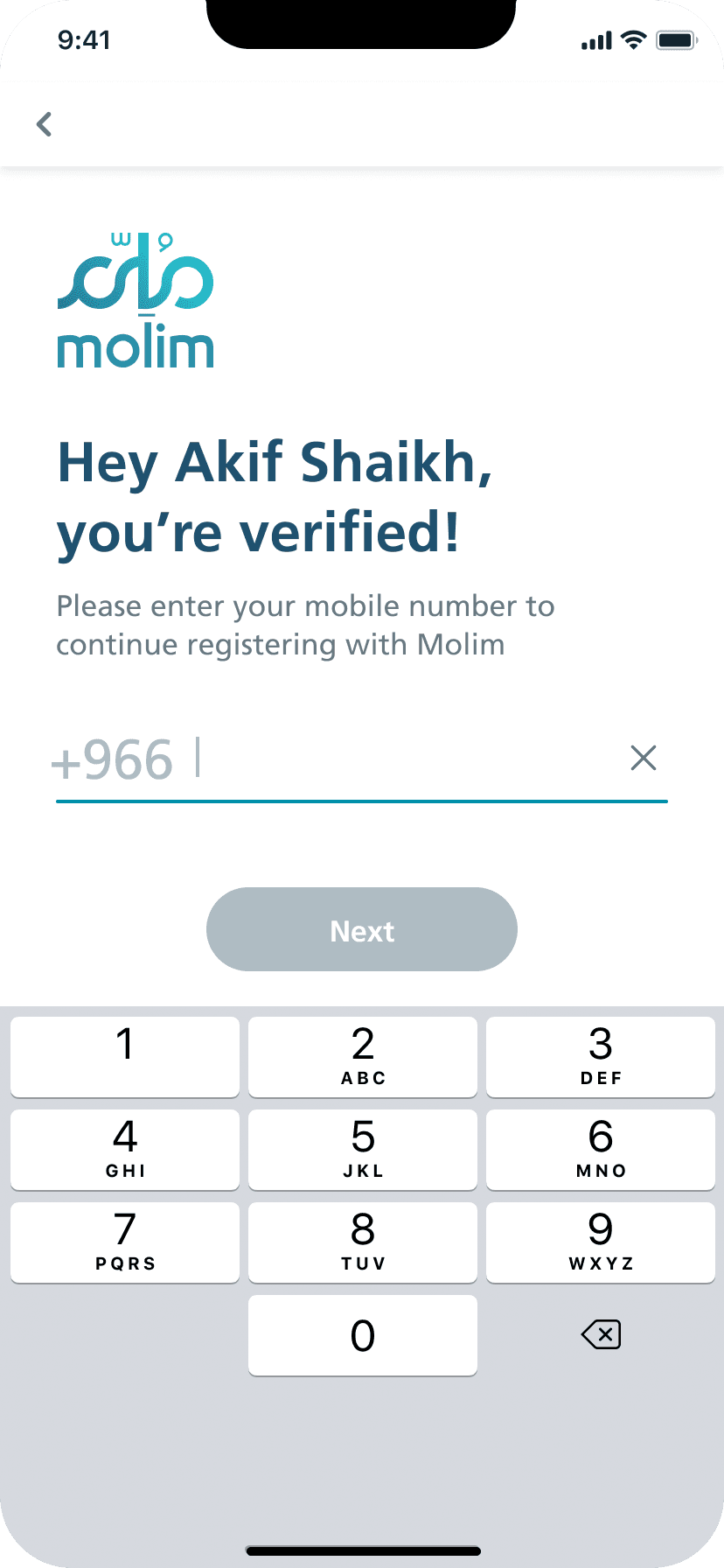
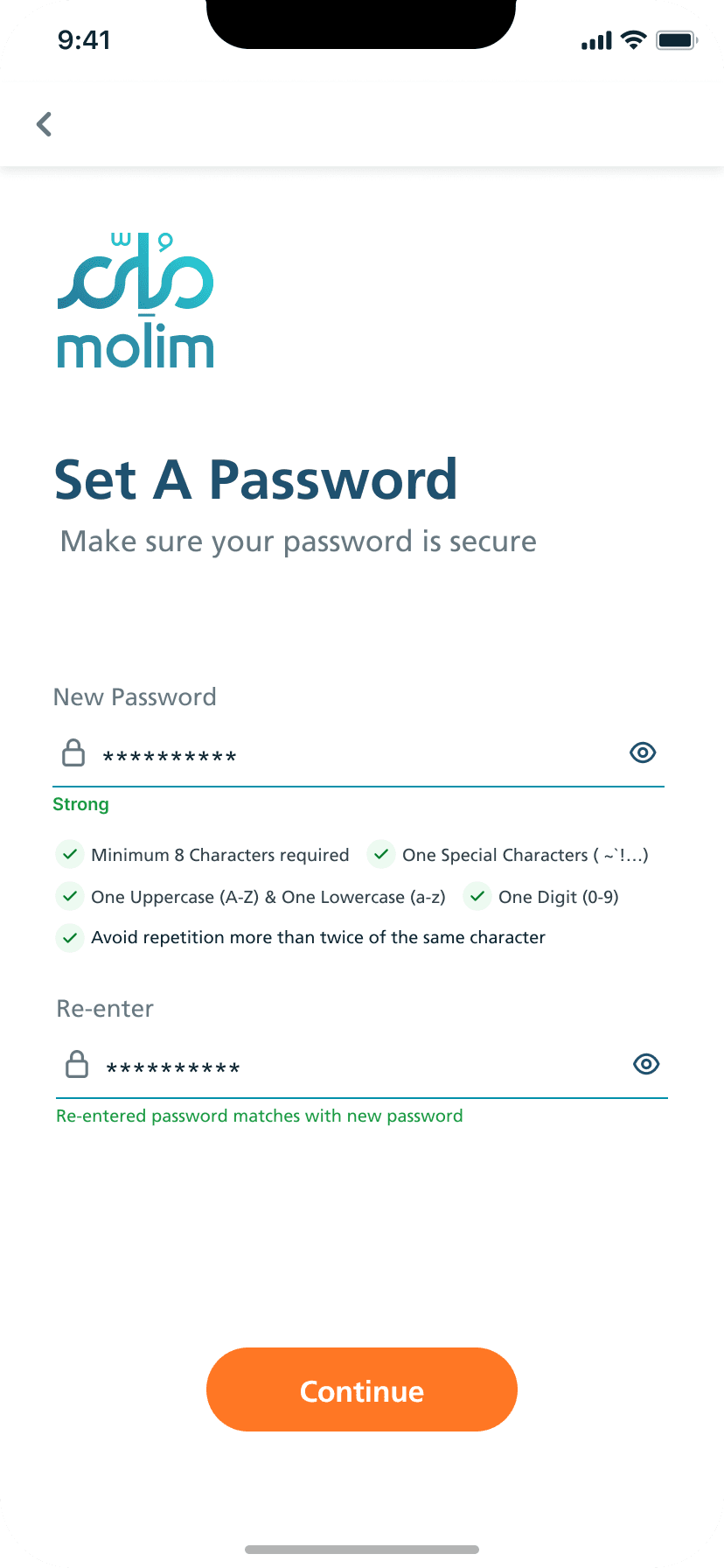
The old onboarding flow had no progress indicators and caused a 38% drop-off during registration.

Users needed:

  • Faster sign-in

  • Less manual data entry

  • Confidence in data security

What changed:

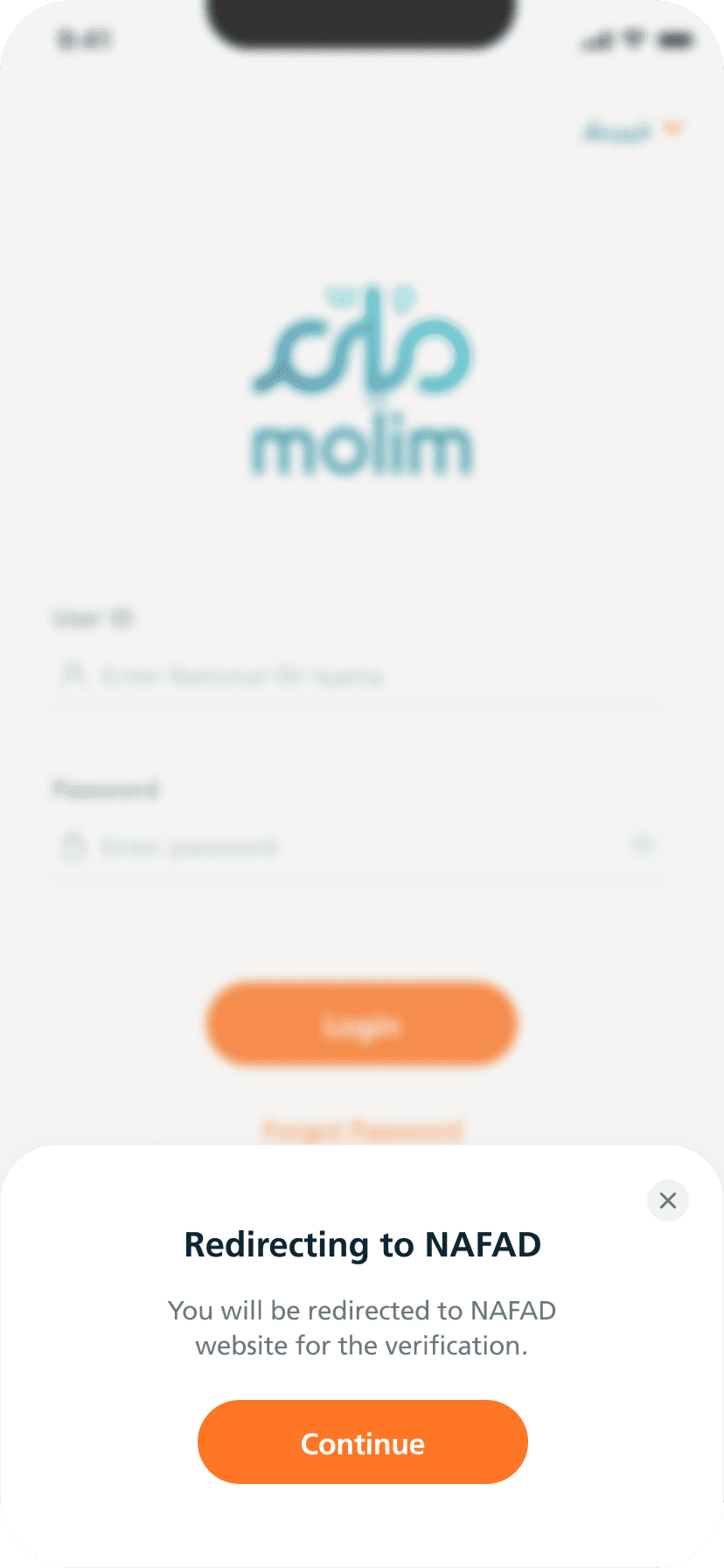
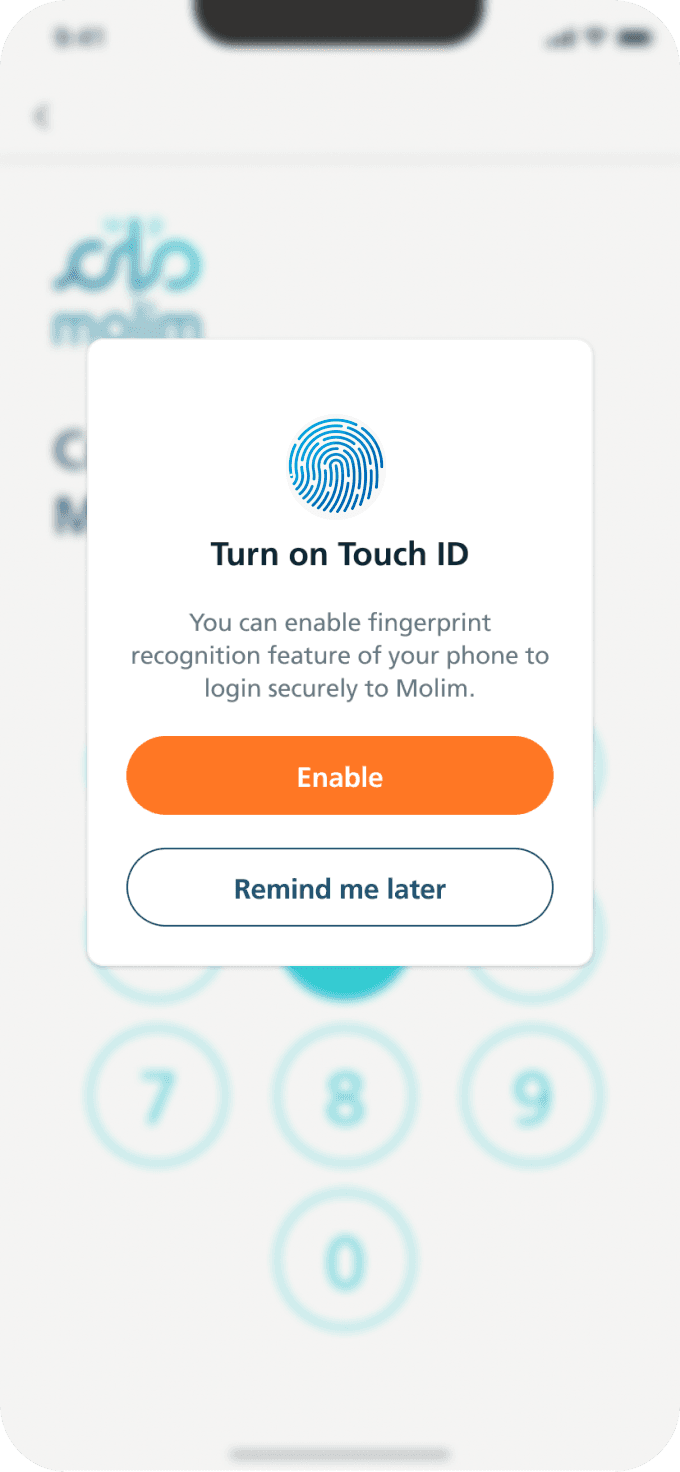
  • Government-credential login

  • Biometric authentication

  • Clear progress indicators

Solution 2

Solution 2

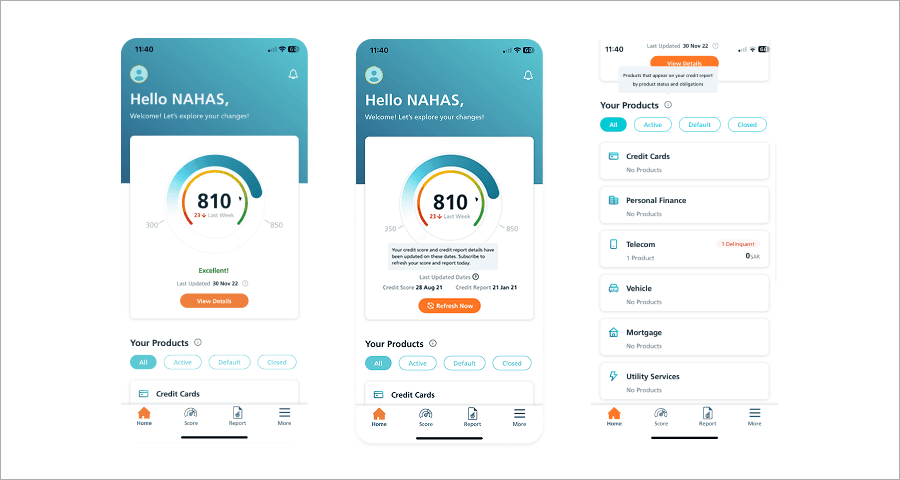
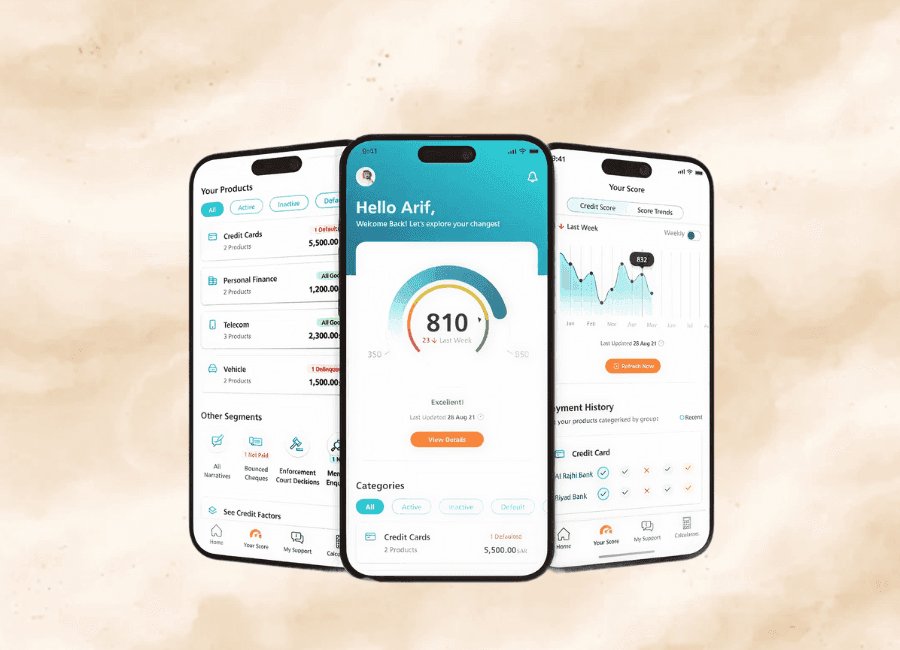
New dashboard

New dashboard

Many users did not understand their credit score or how to improve it. This created anxiety and disengagement.

Many users did not understand their credit score or how to improve it. This created anxiety and disengagement.

What changed:

  • Clear visual hierarchy

  • Simple microcopy explaining credit health

  • Actionable steps to improve scores

What changed:

  • Clear visual hierarchy

  • Simple microcopy explaining credit health

  • Actionable steps to improve scores

Solution 3

Solution 3

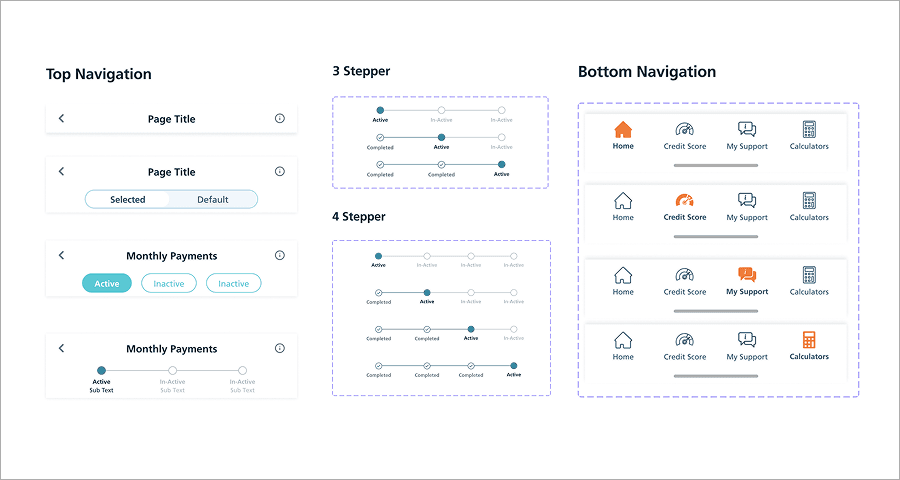
Improved navigation

Improved navigation

The original navigation used ambiguous icons and unclear labels. Some users thought “Score Watch” referred to a physical watch feature.


New users also landed on an empty dashboard with no guidance.

What changed:

  • Redesigned information architecture

  • Standardized icons and labels

  • Reduced navigation depth

Solution 4

Solution 4

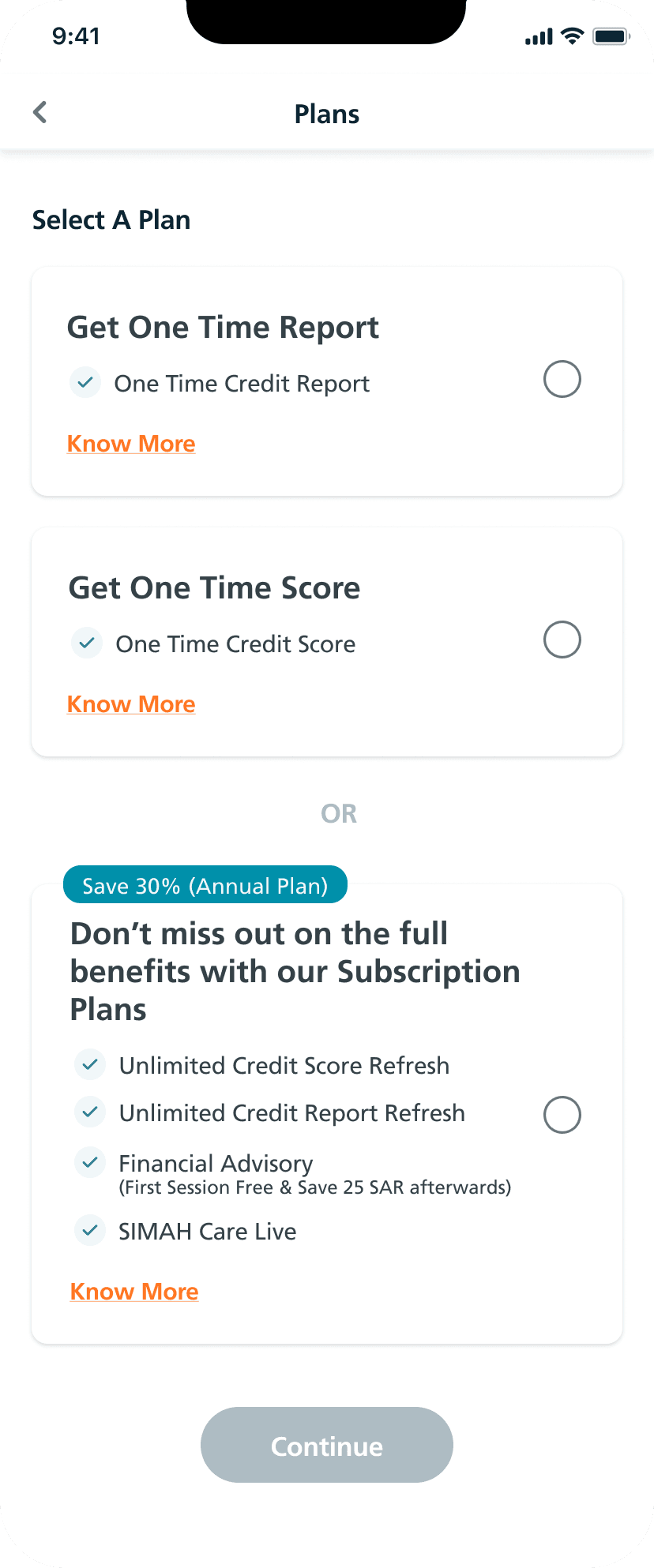
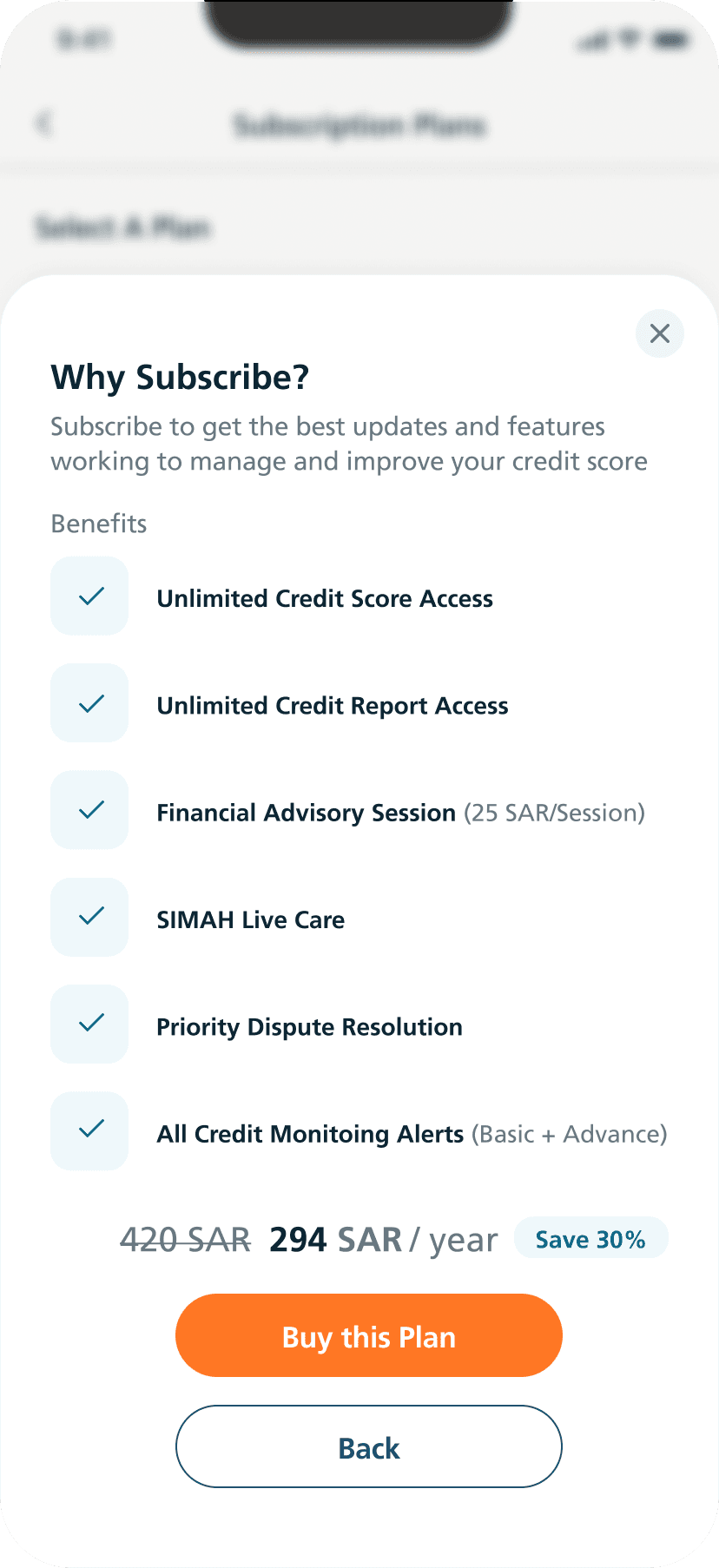
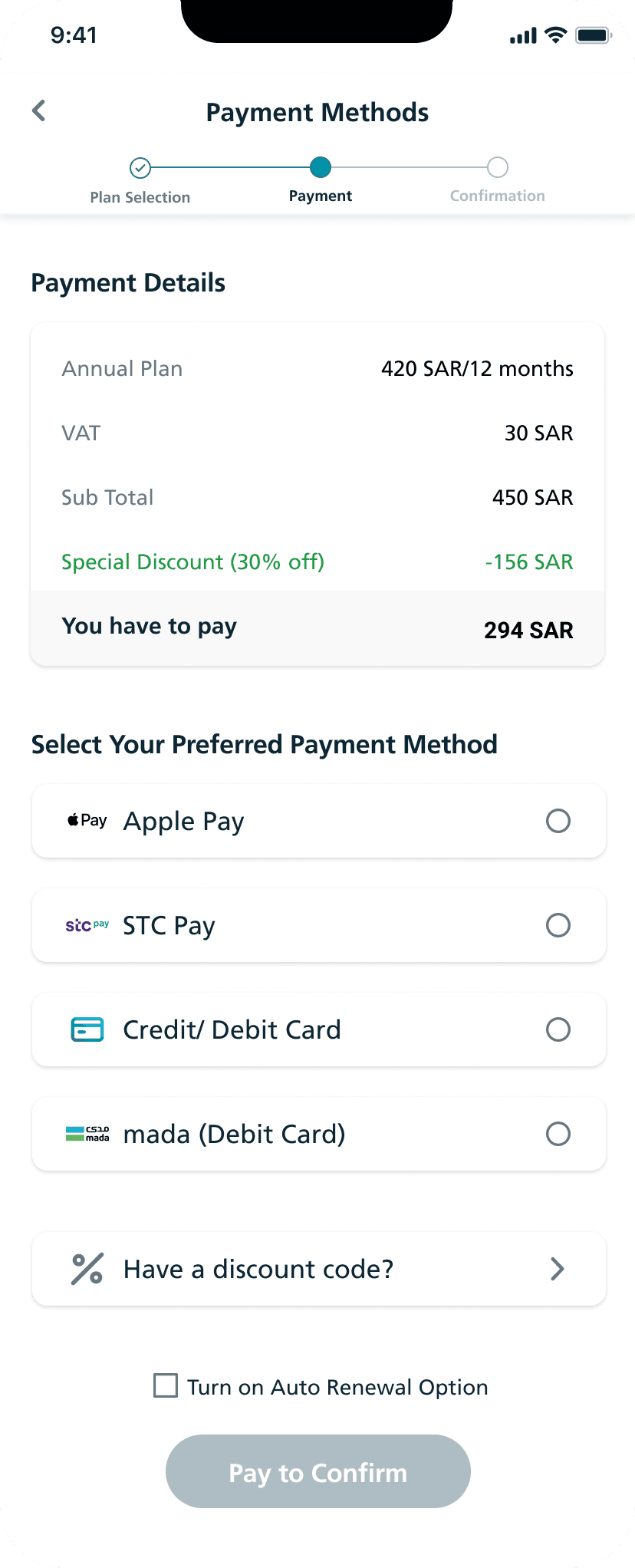
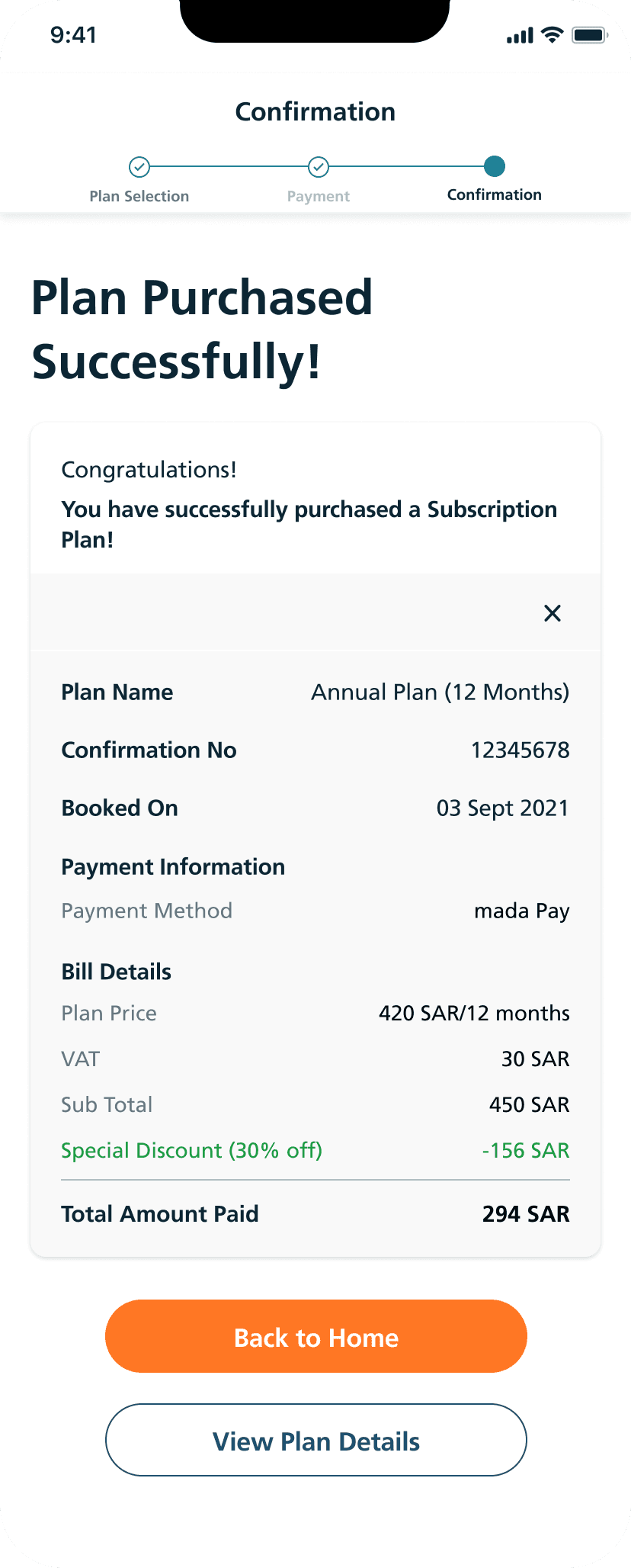
Redesigned subscription model

Redesigned subscription model

The old pricing screen lacked clear comparisons and value explanations.

27% of subscribers cancelled within their first billing cycle.

The old pricing screen lacked clear comparisons and value explanations.

27% of subscribers cancelled within their first billing cycle.

What changed:

  • Simplified pricing tiers

  • Clear comparison table

  • Feature breakdown per plan

What changed:

  • Simplified pricing tiers

  • Clear comparison table

  • Feature breakdown per plan

Solution 5

Solution 5

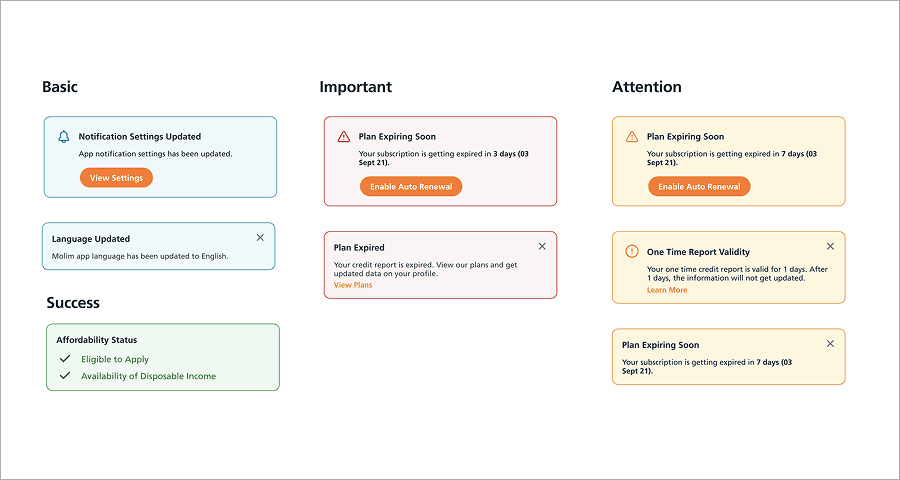
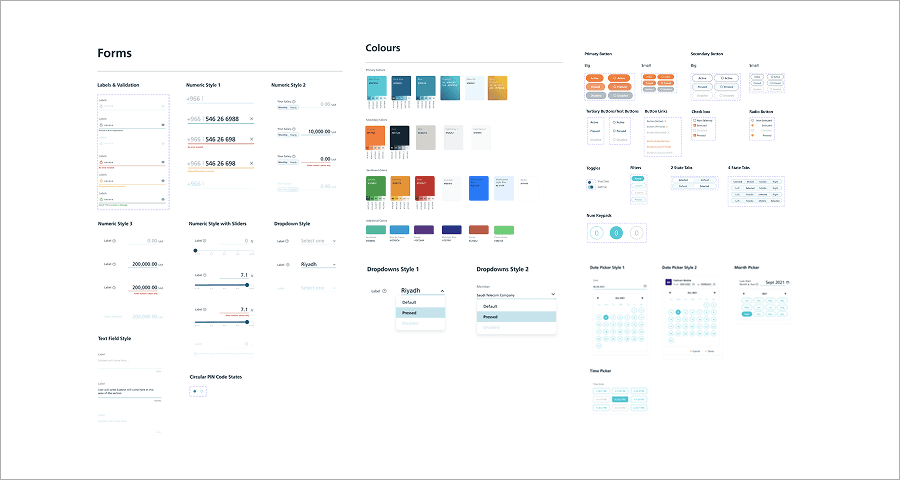
New design system

New design system

The old app design used inconsistent typography, colors, and spacing.

The old app design used inconsistent typography, colors, and spacing.

What changed:

  • Unified visual language

  • Reusable components

  • Documented design patterns

What changed:

  • Unified visual language

  • Reusable components

  • Documented design patterns

This improved consistency and reduced design and development time.

This improved consistency and reduced design and development time.

Solution 6

Solution 6

Personalized themes

Personalized themes

Introduced Light, Dark, and High-Contrast modes to support accessibility and user preference.

Introduced Light, Dark, and High-Contrast modes to support accessibility and user preference.

Light: Clean default look
Dark: Eye comfort, modern look
Contrast: Accessible for users with low vision

Users can switch themes in settings, and the app remembers their choice.

Users can switch themes in settings, and the app remembers their choice.

Impact

Impact

4.2★ rating increased
from 2.8★ on Google Play and 4.1★ on App Store

4.2★ rating increased
from 2.8★ on Google Play and 4.1★ on App Store

30% increase

in subscription conversions

30% increase

in subscription conversions

35% drop in support requests

due to improved usability

35% drop in support requests

due to improved usability

Learnings

Learnings

Secure the right data before forming hypotheses

I should have ensured full data access earlier. Fast decisions still need reliable insights.

Secure the right data before forming hypotheses

I should have ensured full data access earlier. Fast decisions still need reliable insights.

Design for regional context

Western fintech patterns did not translate directly to Saudi users. Local expectations shaped authentication and visual design.

Design for regional context

Western fintech patterns did not translate directly to Saudi users. Local expectations shaped authentication and visual design.

Fix the highest-friction moments first
Onboarding and pricing transparency had the biggest impact on ratings and retention.

Fix the highest-friction moments first
Onboarding and pricing transparency had the biggest impact on ratings and retention.

Molim — Personal credit report & score mobile app

Redesigned mobile app (17M+ users), enhancing the overall experience and increasing ratings to 4.2★ on Google Play store.

Industry:

Fintech (Credit Management)

Role:

Lead UX Designer

Contribution:

Product design, research & synthesis, IA, prototyping and design system

The best diagnostic is the one users complete.

Molim_case_study.exe

Contact:

Follow on:

@2026 Tanuj Bisht • Designed & developed in Framer with ❤️ by me

@2026 Tanuj Bisht • Designed & developed in Framer with ❤️ by me