
Otto — Designing trust in semi-autonomous vehicles for Gen Z Drivers

The safest car means nothing if drivers don't trust it.

Industry:

Autonomous Vehicles

Role:

Service Designer

Type

Master's Final Dissertation

Contribution:

Research and synthesis, user interviews, design and business strategy, concept prototyping, user testing, and UX/UI design

The Problem

The Problem

It would freak me out if people have these cars on the road without fully knowing how to use them.

– Interviewee Participant (U.S. Driver)

It would freak me out if people have these cars on the road without fully knowing how to use them.

– Interviewee Participant (U.S. Driver)

Gen Z drivers will inherit autonomous vehicles, but they don't understand them.

Gen Z drivers will inherit autonomous vehicles, but they don't understand them.

74% of Americans cite safety as their top AV concern, and 39% report confusion about existing driver-assist (ADAS) features.

74% of Americans cite safety as their top AV concern, and 39% report confusion about existing driver-assist (ADAS) features.

The barrier to adoption isn't technology. It's anxiety.

The barrier to adoption isn't technology. It's anxiety.

Challenge

Challenge

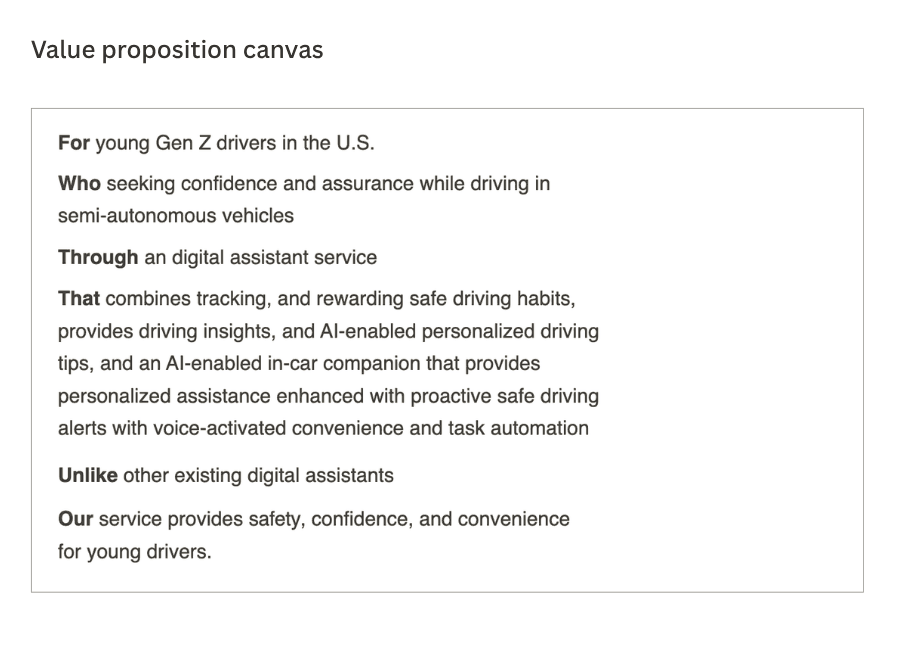
How might we reduce anxiety and build confidence in semi-autonomous vehicles for Gen Z drivers? 

How might we reduce anxiety and build confidence in semi-autonomous vehicles for Gen Z drivers? 

What I did and what I found

What I did and what I found

I led end-to-end service design across a complex ecosystem: drivers, vehicle manufacturers, in-car systems, regulatory frameworks, and emerging AI.

I led end-to-end service design across a complex ecosystem: drivers, vehicle manufacturers, in-car systems, regulatory frameworks, and emerging AI.

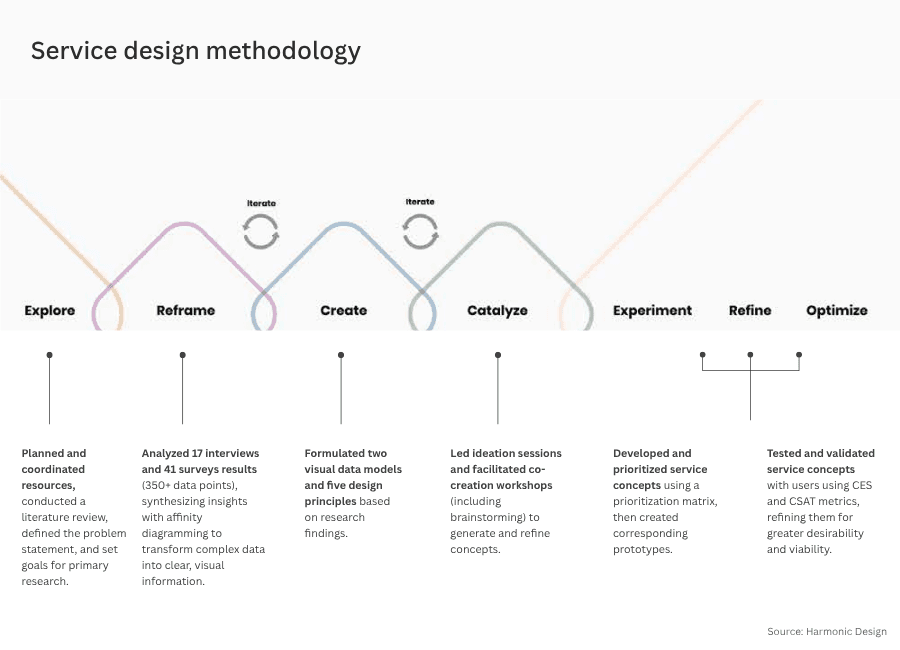
I started with 17 interviews (10 subject matter experts, 7 licensed U.S. drivers) and 41 survey responses, capturing 350+ data points on current experiences and expectations with semi-autonomous vehicles.

I started with 17 interviews (10 subject matter experts, 7 licensed U.S. drivers) and 41 survey responses, capturing 350+ data points on current experiences and expectations with semi-autonomous vehicles.

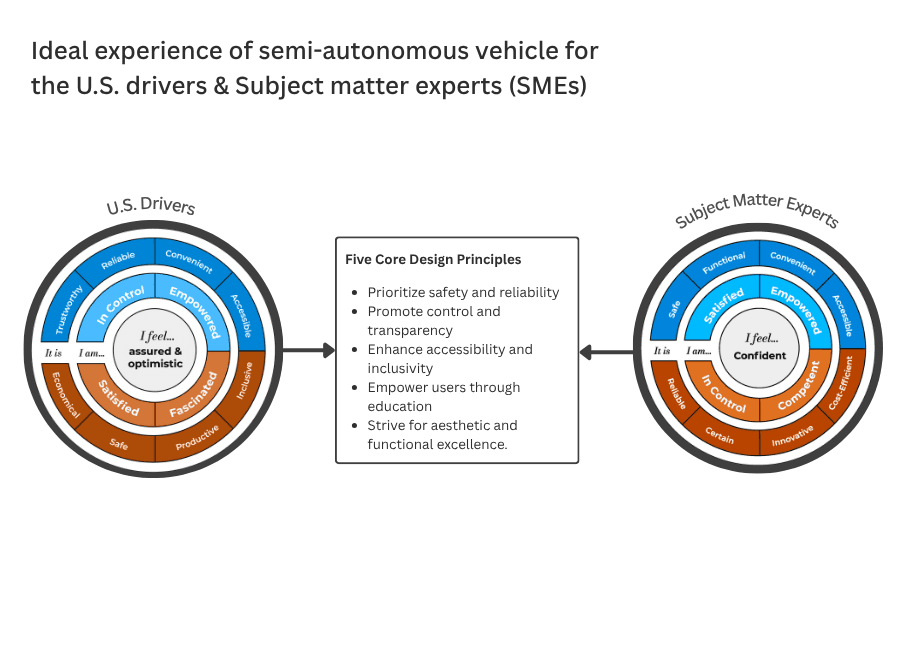
Synthesis confirmed two distinct user needs:

  • U.S. drivers seek assurance and optimism. They want to feel safe, in control, and satisfied.

  • Subject matter experts prioritize confidence and functional reliability. They want the system to be competent, cost-efficient, and innovative.

Synthesis confirmed two distinct user needs:

  • U.S. drivers seek assurance and optimism. They want to feel safe, in control, and satisfied.

  • Subject matter experts prioritize confidence and functional reliability. They want the system to be competent, cost-efficient, and innovative.

I built separate ideal experience models for each group to map these emotional and functional requirements.

I built separate ideal experience models for each group to map these emotional and functional requirements.

That divergence shaped five design principles:

  • Prioritize safety and reliability

  • Promote control and transparency

  • Enhance accessibility and inclusivity

  • Empower users through education

  • Strive for aesthetic and functional excellence.

That divergence shaped five design principles:

  • Prioritize safety and reliability

  • Promote control and transparency

  • Enhance accessibility and inclusivity

  • Empower users through education

  • Strive for aesthetic and functional excellence.

These principles became the filter for every concept I generated and the criteria I used to evaluate solutions.

These principles became the filter for every concept I generated and the criteria I used to evaluate solutions.

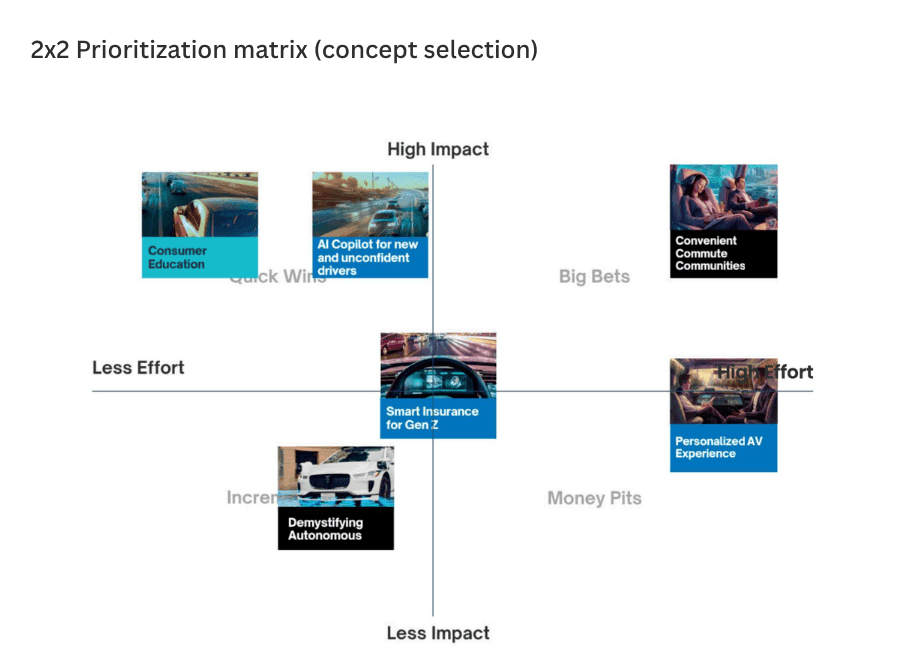
From there, the design direction split into two tracks: confidence-building outside the car and real-time reassurance inside it.

From there, the design direction split into two tracks: confidence-building outside the car and real-time reassurance inside it.

Two interventions survived: Otto Well (a mobile app) and Otto AI (an in-car voice assistant).

Otto — Designing trust in semi-autonomous vehicles for Gen Z Drivers

The safest car means nothing if drivers don't trust it.

Industry:

Autonomous Vehicles

Type:

Master's Final Dissertation

Role:

Service Designer

Contribution:

Research and synthesis, user interviews, design and business strategy, concept prototyping, user testing, and UX/UI design

What I designed

What I designed

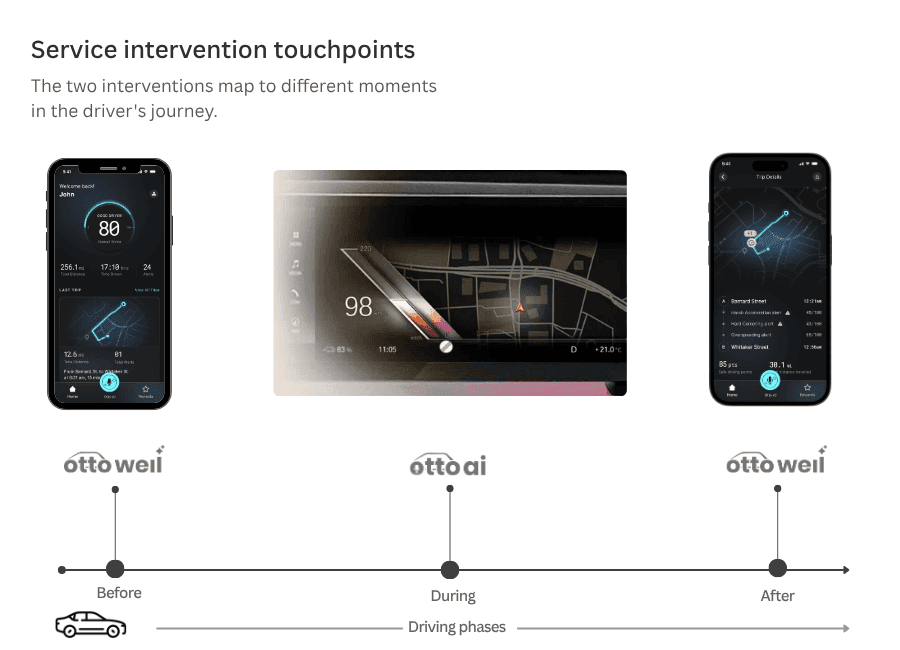
I designed two service interventions to address the challenge: Otto Well, a mobile app, and Otto AI, an in-car voice assistant.
Intervention 1

Intervention 1

Otto Well (Mobile App)

Otto Well (Mobile App)

Otto Well addresses the moment before and after driving: how do drivers build confidence when they're not in the car?

The Problem:

Gen Z drivers can't see their own safety performance. They lack feedback loops that tell them what "good driving" looks like in a semi-autonomous vehicle.

The Solution:

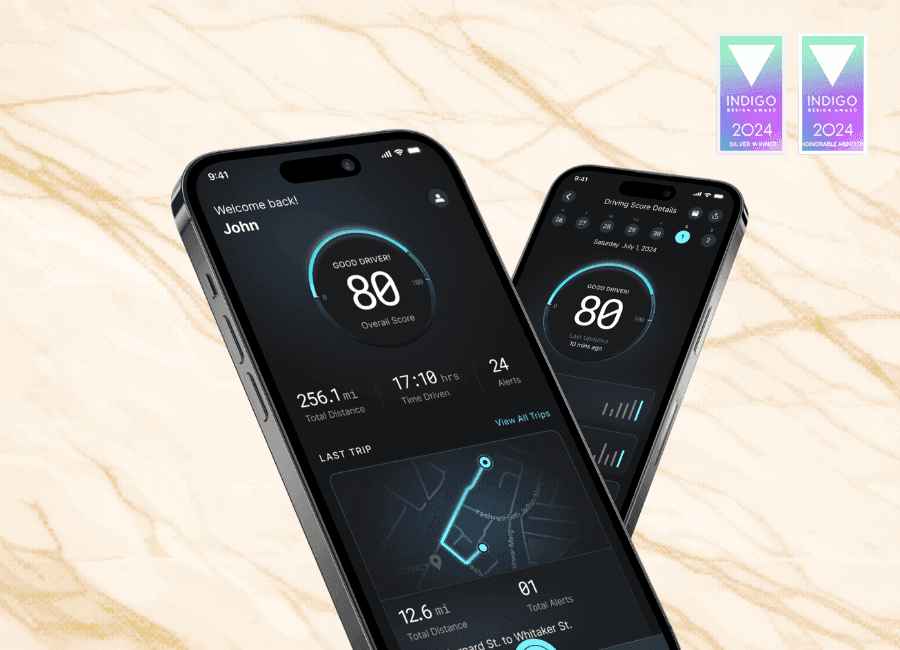
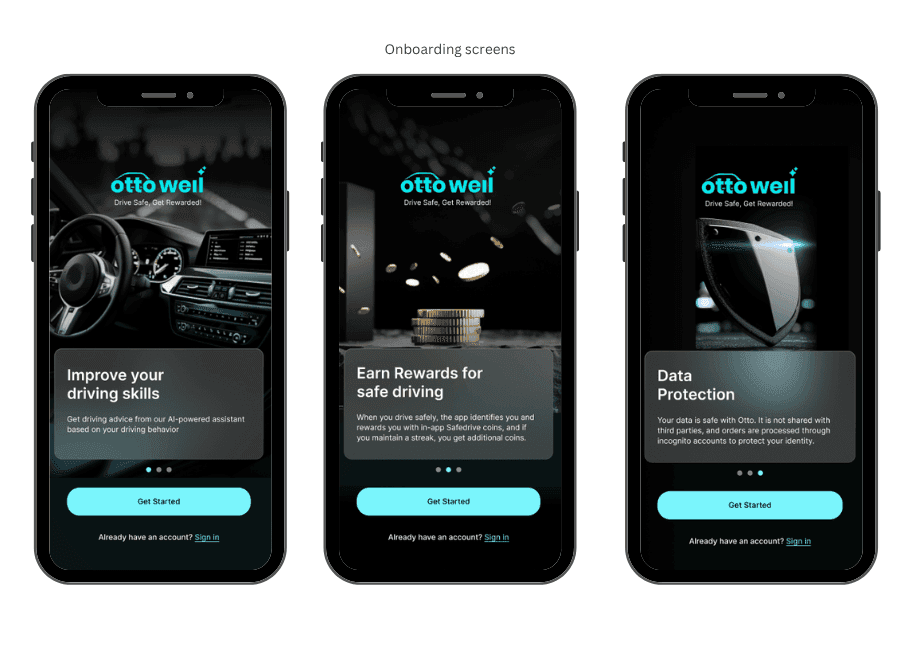
A mobile app that tracks safe driving habits and rewards confidence-building behavior.

Otto Well does three things:

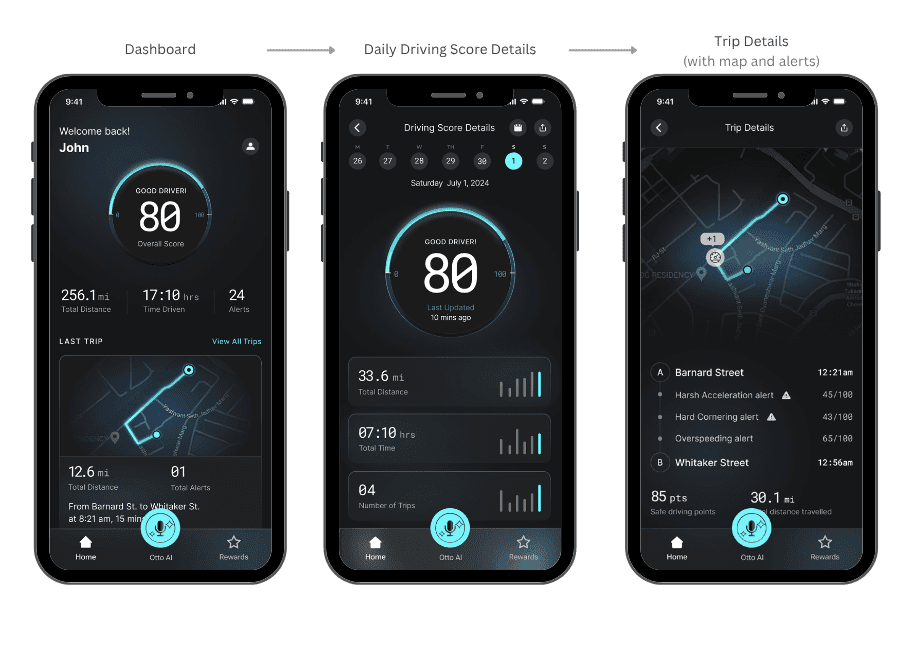
Personalized Driving Tips — After each drive, the app delivers AI-powered feedback specific to that driver's actual decisions, not generic tips. 

Safe Driving Rewards — A gamified rewards system reinforces safety habits: users earn SafeScore points for smooth acceleration, timely lane changes, and predictable braking, which unlock coupons and incentives.

Driving Insights — A visual dashboard shows improvement over time, giving drivers a clear narrative that they're getting better
Intervention 2

Intervention 2

Otto AI (In-Car Voice Assistant)

Otto AI (In-Car Voice Assistant)

Otto AI addresses the moment during driving: how do drivers understand what's happening and trust the system in real time?

The Problem:

Driving a semi-autonomous vehicle requires attention to a system the driver doesn't understand. When a semi-autonomous vehicle does something unexpected, drivers panic. They need clarity in the moment, not after the fact.

The Solution:

Otto AI is a voice assistant that explains what the car is doing and why, as it happens.

Otto Ai does three things:

Voice-Activated Commands — A driver asks "Why did the car slow down?" and Otto responds with context: traffic detected ahead, reducing speed to maintain safe distance. 

Task Automation — Otto handles routine tasks like climate and navigation, freeing the driver to focus on the road and the car's behavior.

Proactive Safe Driving Alerts — Before unexpected events, Otto offers proactive alerts: "We're approaching a high-traffic area. I'm ready to assist if needed. Stay alert."

Image source: BMW AG

Results

Results

I tested both interventions with 6 Gen Z drivers using usability testing methodology. All participants completed both tasks successfully, averaging under 2 minutes per task.
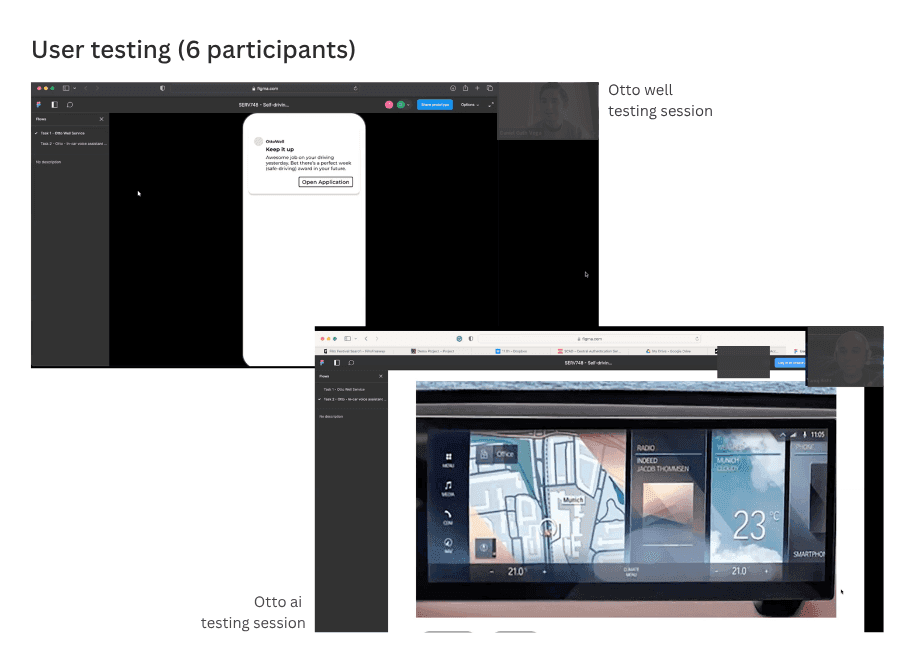
Otto Well performed stronger on satisfaction metrics:

  • Customer Satisfaction: 83

  • Customer Effort Score: 66

  • Net Promoter Score: 90

Across both interventions, average user satisfaction scored 4.25 out of 5 and ease of use averaged 4.08 out of 5.

One participant rated both measures at 5 out of 5. Driver 5 partially failed the driving habits task in Otto Well but completed the personalized tips task, suggesting the feedback loop concept resonated more than the habit-tracking feature.

Otto AI scored:

  • Customer Effort Score: 66

  • Customer Satisfaction: 66

  • Net Promoter Score: 50

Both interventions scored comparably on satisfaction and ease of use, suggesting the core value proposition, reducing anxiety through transparency and feedback, resonated regardless of whether the channel was a mobile app or an in-car voice assistant.

Voice interaction likely introduced more uncertainty than a visual interface.

The difference makes sense. A mobile app gives users control and time to absorb feedback.

A voice assistant requires trust in real time, which is harder to build in a single test session. Longer exposure would likely close that gap.

Three things changed: metrics are presented once instead of duplicated, the false difference is gone, and the partial failure is reframed as a design insight. The section is shorter and every sentence earns its place.

Potential Impact

Potential Impact

This project targets 25.9 million licensed Gen Z drivers in the U.S. With the autonomous vehicle market projected to reach $31 billion by 2026, the potential addressable market for confidence-building services is estimated at $22.32 billion.

This project targets 25.9 million licensed Gen Z drivers in the U.S. With the autonomous vehicle market projected to reach $31 billion by 2026, the potential addressable market for confidence-building services is estimated at $22.32 billion.

Learnings

Learnings

Systems thinking is messy and necessary.

I designed for one person, but that person sits inside a car built by engineers, regulated by governments, insured by companies, and shaped by social attitudes toward automation. Holding all of those systems at once was harder than designing a single interface.

Systems thinking is messy and necessary.

I designed for one person, but that person sits inside a car built by engineers, regulated by governments, insured by companies, and shaped by social attitudes toward automation. Holding all of those systems at once was harder than designing a single interface.

Recruiting participants is harder than designing solutions

No budget, no brand, no user base. Finding 6 Gen Z drivers willing to test an AV prototype required relationship-building and persistence. User research isn't just about asking questions. It's about access and trust.

Recruiting participants is harder than designing solutions

No budget, no brand, no user base. Finding 6 Gen Z drivers willing to test an AV prototype required relationship-building and persistence. User research isn't just about asking questions. It's about access and trust.

otto_ai.exe

Contact:

Follow on:

@2026 Tanuj Bisht • Designed & developed in Framer with ❤️ by me

@2026 Tanuj Bisht • Designed & developed in Framer with ❤️ by me